It should not require a life-defining moment to rethink how you live and lead

Antje Langsch • June 25, 2026

It Took Me Almost Ten Years to Leave Corporate
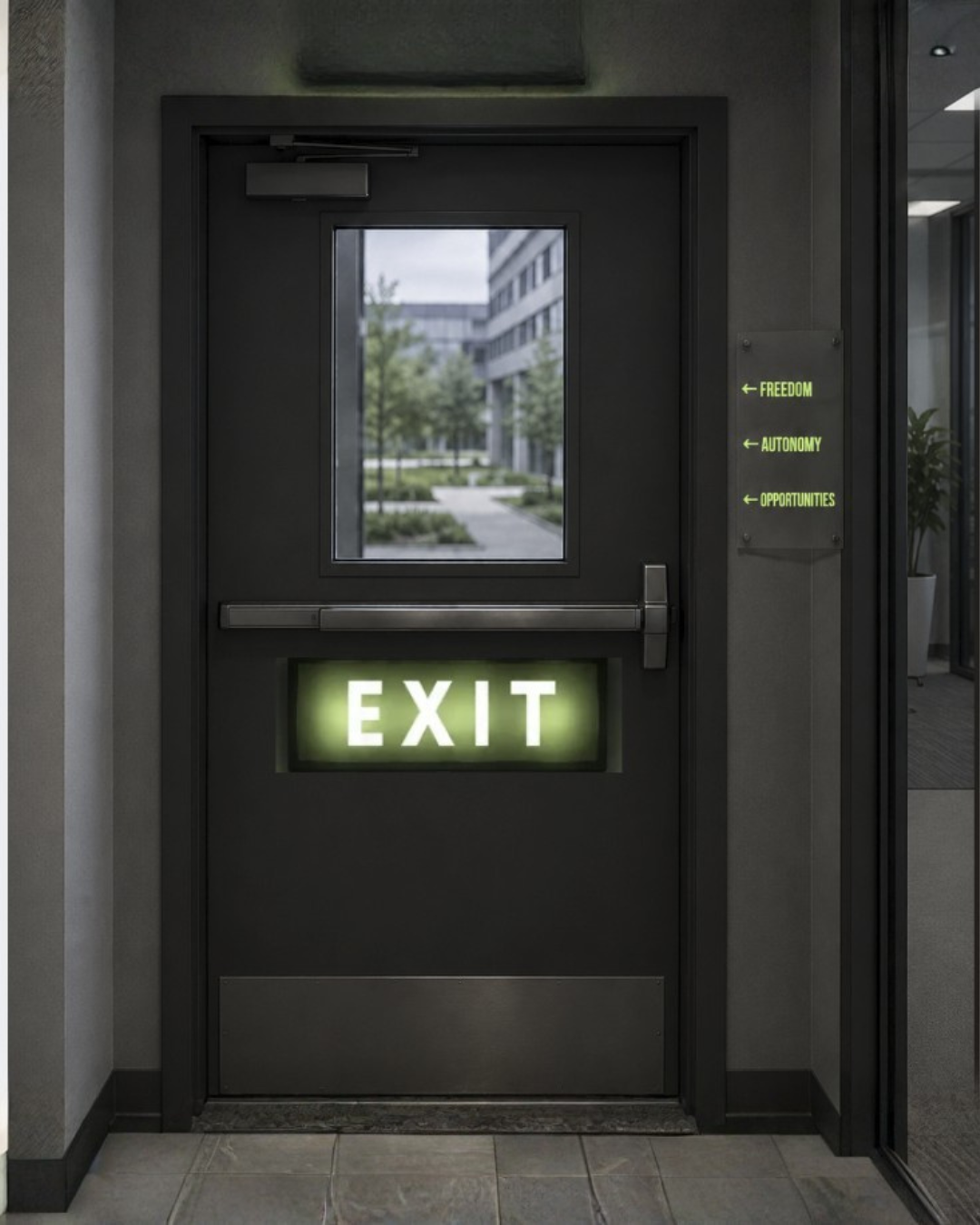
I left corporate in 2021.

But the truth is, I first thought about leaving almost a decade earlier.


On paper, I had a successful career. I worked internationally, held senior roles, and had opportunities I feel genuinely grateful for. I learned a tremendous amount, worked with incredible people, and experienced things I never imagined possible.

I was fortunate.


And yet, there was also a quiet question that never fully went away.

Is this still the life I want?


I think many accomplished professionals know this feeling. You can appreciate your career and still feel restless. You can be successful and still wonder whether something needs to change.


For years, I carried that tension. Then life intervened.

In 2020, my husband suffered a stroke on the tennis court.

Thankfully, he recovered well. But moments like that have a way of changing your perspective forever.

They force you to confront questions that are easy to postpone when life feels busy and predictable.

How do I want to spend my time?

What truly matters to me?

Am I living and working in a way that reflects my priorities?


For me, it was the wake-up call I needed.

Not because I suddenly stopped appreciating my career. I still look back on my corporate journey with gratitude.

But it made me realise something I wish I had understood much sooner:

It should not take a life-defining moment to rethink how you live and lead.

That experience finally gave me the courage to make the move I had been contemplating for almost ten years.


And I have never regretted that decision.


But I also wish I had known something else much sooner.

Leaving corporate is not a solution to everything.

Entrepreneurship brings incredible opportunities, but it also brings uncertainty, responsibility, pressure, and challenges of its own. We often look at business ownership through rose-tinted glasses. We see the freedom but underestimate what it takes to create something sustainable.

And it certainly is not for everyone.


In fact, one of the biggest lessons from my own journey is this:

The answer is not always leaving.

What I know now is that there were things I could have done much earlier to make my corporate experience more manageable, more fulfilling, and significantly less stressful:


I could have become clearer about my values.

I could have understood my strengths and needs better.

I could have challenged some of the assumptions I held about success, myself and others.

I could have made more intentional decisions rather than carrying uncertainty for so long.


That is why I do the work I do today.

I help accomplished professionals create clarity before life forces the question upon them.

Not because everyone should leave corporate.

Quite the opposite.

Some of my clients rediscover fulfilment and thrive in their existing organisation.

Some realise they are simply in the wrong environment and move elsewhere.

And some decide that working for themselves is the right next chapter.


The destination differs.

The process does not.


It starts by creating the space to think differently, understand yourself more deeply, and make decisions with intention rather than reacting to circumstances.


Because the best decisions are rarely made from exhaustion, frustration, or the need to escape.


They are made from clarity.


And perhaps most importantly, they do not and should not require a life-defining moment to permit you to rethink how you live and lead.


I know because it took one for me.

Read more on the blog


By Antje Langsch February 28, 2026
Outwardly, everything looks exactly as it should. You have built the career. Earned the title. Delivered the results. And yet, somewhere beneath the surface, something no longer feels fully aligned. A professional crossroads is often misunderstood. It is not always triggered by failure, burnout or crisis. In many cases, it emerges when capable, successful professionals begin to sense that their next chapter requires a more deliberate choice. Over the years, I have seen this pattern repeatedly, first in myself and then with other senior leaders at pivotal moments in their careers. A professional crossroads rarely announces itself dramatically. More often, it shows up through subtle but persistent signals. Here are five to pay close attention to: 1. Your success no longer feels energising There was a time when achievement gave you momentum. Now, the wins land differently. You still perform. You still deliver. But the sense of forward energy has softened. What once felt motivating now feels… neutral. This is often one of the earliest indicators of misalignment. High performers are particularly skilled at pushing through this phase. They stay focused, disciplined and externally successful. But internally, the energy equation has shifted. When success stops replenishing you, it is worth pausing to understand why. 2. You feel increasingly restless, even in stable conditions From the outside, your role may look secure and well-earned. Yet internally, there is a growing sense of restlessness. Not impulsive frustration, but a quieter, more persistent questioning. You may notice thoughts such as: Is this still the right place for me? Am I using my full capability? What might the next chapter look like? Restlessness at this stage of a career is rarely random. It is often a signal that your professional identity is evolving faster than your current environment. Ignoring it does not make it disappear. Instead it makes it harder to ignore over time. 3. Decisions that once felt clear now feel heavier Experienced leaders are typically strong decision-makers. However, at a genuine crossroads, even capable professionals may notice increased decision friction, particularly around their own future. You may find yourself: delaying decisions you would previously have made swiftly over-analysing options that once felt straightforward feeling unusually fatigued by career-related choices This is not a loss of capability. More often, it reflects competing internal priorities: security versus growth, identity versus possibility, logic versus instinct. When clarity starts to blur around your own path, it is often worth stepping back strategically rather than simply pushing harder. 4. The gap between who you are and what your role demands is widening This signal is subtle but powerful. Over time, professionals evolve. Values sharpen. Priorities shift. Tolerance for certain environments changes. At a crossroads, you may begin to notice: parts of the role that drain you more than they once did expectations that feel increasingly misaligned with your strengths a quiet sense that you are operating slightly out of sync with yourself Importantly, this does not mean the role is objectively wrong. It means the fit may no longer be as precise as it once was. And at senior level, even small misalignments compound over time. 5. You are performing well, but thinking more about what comes next This is one of the clearest indicators. You are still delivering. Possibly at a very high level. There is no immediate crisis forcing change. And yet your attention is increasingly drawn forward. You find yourself wondering: What would a more intentional next chapter look like? Do I optimise where I am, or is it time to transition? If not now, when? This forward-looking tension is often the true moment of inflection. Not when performance drops. But when awareness rises. A crossroads is not a crisis - it is a strategic moment One of the biggest misconceptions I see is this: Professionals often believe they should only reassess when something is clearly broken. In reality, the most effective transitions are made from positions of strength, not urgency. A professional crossroads is not necessarily a signal to leave. Nor is it a signal to stay. It is an invitation to step back, assess deliberately, and make a decision that reflects who you are now, not who you were five or ten years ago. Handled well, this moment becomes a point of strategic clarity rather than reactive change. If this feels familiar You are not alone in this experience. Many accomplished professionals reach a stage where the external markers of success remain strong, while internally the questions become more nuanced. The key is not to rush the decision.  But equally, not to ignore the signal. If you are currently weighing whether to optimise where you are or explore a more significant shift, this is exactly the kind of strategic question I help senior professionals work through. Closing thought Clarity rarely arrives through momentum alone. It begins with the willingness to pause and look more closely at what is already changing beneath the surface.
By Antje Langsch December 23, 2025
Reflection Matters More Than Momentum
By Antje Langsch September 25, 2025
Redefining What Achievement Means